
Veterans, connection supports health and happiness
Everyone has their own story. As veterans, we also share unique interests, needs, and challenges when it comes to connecting with others. No matter what, connection brings real benefits. Together with our friends and families, we can support one another in finding the connection we all need.


Connection carries benefits for veterans
Through connection, you can support your own mental health, renew a sense of purpose, and expand your relationships and experiences.

Connection helps mental health. Many older adults (and people of all ages) experience isolation and loneliness. Spending time with friends and family is one way to support your own well-being and mental health.
Connection provides direction. For some older adults, serving in the military provided a sense of purpose — a sense of direction and meaning from working with other people on something bigger.
You can renew that sense of purpose through connecting with other people, whether you pursue a new hobby, volunteer to help others, or join a club.
Connection makes life richer. Being intentional about spending time with others can help you find like-minded people and gain new experiences. It can help you visit new places and learn new skills and points of view.
Veterans can connect on their own terms
Here are some ideas for connecting at your own pace in places that feel comfortable.

Smart small. Go slow. Some veterans might prefer to connect in calm, small and predictable settings. If this is you, try activities that make it easier to connect at your own pace:
- One-on-one meetups for coffee.
- Walks with a friend or neighbor.
- Fishing, gardening or working together on a project.
- Fixing things for people or teaching a skill to someone.
Here are some tips for making stronger connections with people who are already around you.
Meeting up with other veterans. Many veterans like to talk or just spend time with others who can relate to military experiences. Veterans organizations work for some people, like the:
You can look online for virtual veterans groups, such as:
- The women’s network WoVeN.
- r/Veterans on Reddit.
Some people prefer groups that are open to anyone but happen to attract veterans. Use the Find Your People tool to find options in your area, like groups or events related to:
- Bowling.
- Archery.
- Camping.
- Gardening or homesteading.
- Motorcycles or cars.
Friends and family can make connection easier
Anyone can help an older veteran feel included and supported, no matter your age or whether you’ve served. Here are some suggestions.

Check in regularly. Even older veterans who stay in touch with friends and family often want more connection. And while many enjoy time with other veterans, most also want to connect with non-veterans.
Consistency can make a big difference. Schedule daily or weekly phone or video calls, visits or meetups.

Ask them what works for them. Some older veterans avoid crowds and loud noises. They might also want to stay away from unfamiliar environments, bright lights or strong smells. They might want to avoid spaces that lack wheelchair ramps or other accessibility features.
If you don’t know a veteran’s needs and preferences, it’s OK to just ask, “Where do you feel comfortable? What do you like to do?”

Consider low-key activities. Some people prefer one-on-one time or small groups outside or at home. Keep plans flexible, predictable and low-pressure. For example:
- Invite them to go for a walk or get coffee.
- Go fishing or work in the garden together.
By listening well, others can help ease isolation
For some veterans, talking openly about their military experiences can help them feel more connected. Not everyone is prepared to listen well, however. Here is some guidance for family members and friends.
Make sure you’re ready. Only invite conversation with a veteran if you can truly hear their honest responses.
Make sure you have time. This will let them tell their story without interruption.
If you’re inviting conversation, ask questions that show interest and consideration. Avoid asking them to recount traumatic experiences. Instead, consider: “What service were you in?” “Why did you choose that one?” “What inspired you to join?”
Ask them about positive aspects of service. Many veterans found strength and purpose through the military. You can support that sense of strength by asking what was good about their experience.

Listen actively. Ask gentle questions about the veteran’s experiences and how they feel about them. Avoid offering your opinions, trying to “fix” them, or telling them you know how they feel.

Be a quiet, steady presence. If they become emotional, your calm support shows you understand, respect and accept them.
Remind them that asking for help shows strength. If a veteran is struggling with their mental health, encourage them to get support.
- One place to start is the Washington State Department of Veterans Affairs’ counseling program.
- If you think they might be thinking about suicide, ask them directly, “Are you thinking about suicide?” Encourage them to call 988 and press 1.
- You can call, too. When you dial 988 and press 1, you reach the 24/7, confidential crisis support line for veterans and the family and friends who support them.
‘Through each other’s ups and downs’
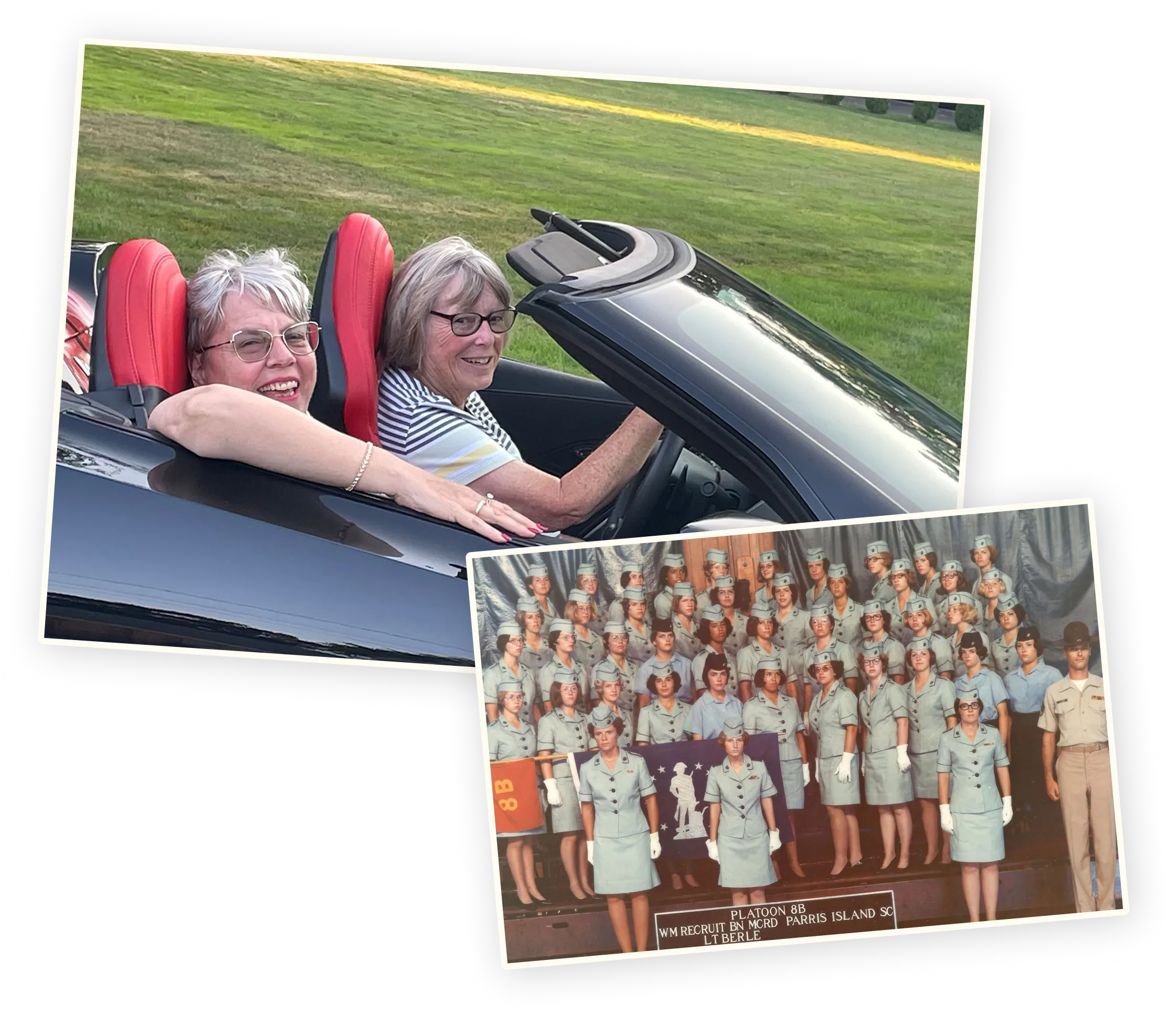
Peggy (in the passenger seat) served in the U.S. Marines for 23 years. Long before her service, she and Bonnie had already formed a lifelong bond, friends since they were born just three months apart. Over the years, there were times when they saw each other less, especially during Peggy’s deployments overseas. But they always found their way back to each other.
“We’ve been through each other’s ups and downs,” Peggy says. Her advice for reconnecting with longtime friends: “It’s never too late. Reach out.”
The older photo shows Peggy with her platoon at boot camp graduation in 1973. She says of that time with her unit: “After a couple of weeks, you really are relying on each other, good or bad.”